About Lower Back Pain
Eighty percent of adults will experience significant low back pain sometime during their lifetime. Low back pain usually involves muscle spasms of the supportive muscles along the spine. Also, pain numbness, and tingling in the buttocks or lower extremity can be related to the back. There are multiple causes of low back pain (see below). Prevention of low back pain, as well as knowing self-care options for acute low back pain, are important, as symptoms can recur on more than one occasion.
Common causes of lower back pain
- Muscle strain - The muscles of the lower back provide the strength and mobility for all activities of daily living. Strains occur when a muscle is overworked or weak.
- Ligament sprain - Ligaments connect the spiral vertebra and provide stability for the lower back. They can be injured by a sudden, forceful movement or prolonged stress.
- Poor posture - Poor postural alignment (such as slouching in front of the TV or sitting hunched over a desk) creates muscular fatigue, and joint compression, and stresses the discs that cushion your vertebrae. Years of abuse can cause muscular imbalances such as tightness and weakness, which also cause pain.
- Age - Wear and tear, and inherited factors may cause degenerative changes in the discs (called degenerative joint disease). Normal aging causes decreased bone density, strength, and elasticity of muscles and ligaments. These effects can be minimized by regular exercise, proper lifting and moving techniques, proper nutrition and body composition, and avoidance of smoking.
- Disc bulge - Also known as herniation, can cause pressure on a nerve, which can radiate pain down the leg. This generally responds well to a strengthening and stretching program and rarely requires surgery.
- Other causes of low back pain include bladder/kidney infection, endometriosis, cancer, or ovarian problems.
Self-care treatment
- Rest - Rest from any aggravating activity. Avoid prolonged sitting, driving, bending, heavy lifting, and twisting.
- Ice - Ice applied to the lower back for 15 minutes every 1-2 hours helps reduce pain and spasm. Avoid using heat for the first 48 hours of an acute injury.
- NSAIDs - Your doctor may prescribe anti-inflammatory medication such as aspirin, Advil, Aleve, ibuprofen, or naproxen sodium.
- Early exercise - Gentle exercise for mobility and stretching (especially the muscles of the legs and back) can help decrease the severity, duration, and recurrence of low back pain. Try the suggested exercises below. Do not perform exercises that increase your pain.
- Positioning - Modifying your sleeping position can help ease the strain on your lower back. Make sure your bed is firm enough to give you adequate support, and use a small pillow for your head. If you sleep on your back, try putting a pillow under your knees. Or if you prefer to sleep side-lying, put a pillow between your knees and a folded towel under your waistline.
- When to seek professional help - See your health care provider if you have the following:
- significant pain that persists beyond a week,
- unexplained fever,
- unexplained weight loss,
- redness or swelling on the back or spine,
- pain/numbness/tingling that travels down the leg(s) below the knee,
- leg weakness,
- bowel or bladder problems,
- or back pain due to a severe blow or fall.
Prevention of lower back pain
- Once the severity of pain has decreased, a rehabilitation program to strengthen your hip, abdominal, and back muscles can help prevent future occurrences. Perform the exercise below daily.
- Posture! Posture! Posture! The goal is neutral spine, not slumped or over-arched.
- Learn proper lifting and body mechanics.
Basic exercises for the lower back
Hamstrings
|
Hip Flexors
|
Simple Knee to Chest
|
Prop Up on Elbows
On a firm surface, lying on your stomach, prop up on your elbows. Keep the pelvis, hips, and legs relaxed. If propping on elbows is painful, try only lying on your stomach or with a pillow under your abdomen. Hold 30 seconds. Repeat 3-5 times. |
Pelvic Tilt Flatten back by tightening stomach and buttock muscles. Hold 10 seconds. Repeat 10 times. |
Tail Wag
|
Cat and Camel
|
Lumbar Position
Slowly rock your knees from side to side in a pain-free range of motion. Allow the back to rotate slightly. Repeat 10-15 times. |
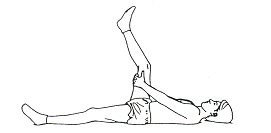
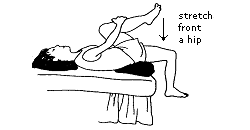
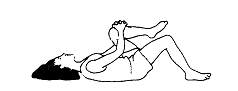


Stretching illustrations used with permission from Visual Health Information (VHI). Copyright, VHI, 1999 / 1-800-356-0709.